


FWD: over a third of wholesalers experience weather-induced shortages
More than a third of food wholesalers experienced stock shortages due to the impact of this summer’s extreme weather, according to new research by the FWD.
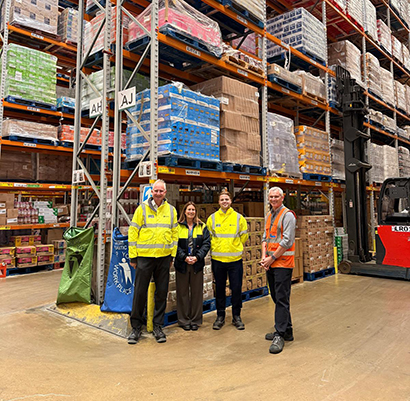
Daniel Zeichner MP (left) at Sysco’s Reading depot where the recommendations of the Food Resilience Commission were launched. Pictured with him are (left to right): Helen Hydes of Sysco, Lewis Klein of DGA Group, Nick Lipscombe of Sysco.
The research found that:
• 60% of food wholesalers surveyed experienced disruption
• Half increased contingency or buffer stock and added vehicles, drivers or delivery shifts to keep food supplies moving and limit disruption to customers
• More than 60% said existing infrastructure and operating arrangements could not cope with another comparable summer without significant additional cost or support
The Food Resilience Commission, chaired by former food minister Daniel Zeichner MP and convened by FWD, has published four interim recommendations as part of its ongoing inquiry examining how to strengthen the resilience and long-term security of the UK’s food supply chain.
1. Make food resilience a national security priority, embedding it more explicitly within the UK’s national security and resilience frameworks with clear cross-Government ownership and accountability.
2. Establish a permanent Government-industry food resilience forum, creating a standing mechanism for businesses and Government to share intelligence, map critical dependencies and strengthen contingency planning.
3. Regularly stress-test the food system against concurrent shocks, testing the UK’s preparedness for scenarios in which extreme weather, cyber attacks, geopolitical disruption and interruptions to energy, fuel, transport or trade occur simultaneously or in quick succession.
4. Help food businesses invest in resilience to extreme weather and other shocks, including measures to support investment in energy efficiency, cooling and refrigeration, cyber security, backup systems and business continuity.
James Bielby, CEO of the FWD, said: “This summer has shown how quickly prolonged heat and drought can put pressure on the food supply chain. Our members are already reporting disruption to supply and shortages of some products, but wholesalers have worked hard to manage those pressures and keep food moving to the shops, restaurants and public services that depend on them.
“Much of that disruption may never be visible to consumers because wholesalers are holding additional stock, adapting deliveries and taking other steps to maintain supply. But doing that comes at a cost, and many of our members are telling us that another summer like this would require significant additional expenditure or support.
“We cannot assume businesses will always be able to absorb those pressures before they reach customers. As extreme weather becomes more frequent, strengthening the resilience of the food supply chain is essential to protecting the country’s food security. The Commission’s interim recommendations set out practical steps for government and industry to plan for these risks together.”
The Commission will continue gathering evidence through the autumn, including through a third roundtable and its ongoing written call for evidence. Businesses and organisations from across the food supply chain are encouraged to contribute their experiences, evidence and recommendations to help shape the Commission’s final report.
The Commission will publish its final recommendations to Government later this year, setting out practical measures to strengthen the resilience and long-term security of the UK food supply chain.
Published Date: September 1, 2026