
Bidfood purchases ECOOLTEC transport refrigeration units
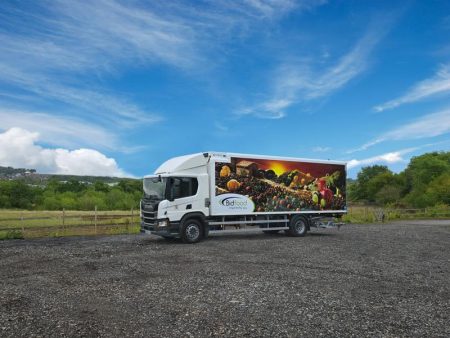
Bidfood has purchased its first two 18-tonne trucks with transport refrigeration systems from ECOOLTEC, which use wholly natural refrigerants. They are being used for regional distribution from the Bidfood depot in Nottingham.
 The aim is to accelerate the decarbonisation of Bidfood’s refrigerated vehicle fleet and further reduce the carbon footprint of its transport operations.
Faye Reeve, head of procurement at Bidfood’s parent company Bidcorp UK, expects savings of up to 25 tonnes of CO2 equivalent per vehicle simply by initially filling them with natural refrigerants.
“Our fleet has run electric driven transport refrigeration units for over 15 years, but the ECOOLTEC product offered an opportunity to go further and address the use of refrigerants,” Reeve said.
“ECOOLTEC utilises wholly natural refrigerants, with virtually zero global warming potential. This is really attractive to us at Bidfood, particularly as we focus more on decarbonising our fleet and continuing our mission to be a positive force for change.”
Bidfood’s fleet comprises a total of 1,350 refrigerated vehicles. The two new vehicles are Scania P250s with multi-temp bodies from Gray & Adams and the ECOOLTEC TM182 transport refrigeration system and, according to Reeve, they have already proven themselves in everyday use over several weeks. “I am pleased to say the systems are working well to date,” she reports.
Reeve added: “We calculate to remove 19 to 25 tonnes of CO2 equivalent from the cold chain on the initial fill of refrigerant – depending on which competitor’s product we compare the ECOOLTEC systems with. So, for both vehicles, this will mean a total of between 38 and 50 tonnes of CO2 equivalent.”
Bidfood keeps its refrigerated vehicles for around 10 years. “Because of this long service life, we place a huge emphasis on low total cost of ownership. We take numerous factors into account, such as the energy efficiency of the system and maintenance costs. A reliable availability of spare parts is also important,” Reeve explained.
The consequences of the stricter F-gas Regulation are playing an increasingly decisive role in purchasing decisions. The F-Gas Regulation (EU) 2024/573 initially phases down the use of synthetic refrigerants and will ban them completely by 2050 (phase-out). The UK is expected to introduce similar regulations.
These have a major impact on the price and availability of refrigerants and thus on the long-term operational reliability of transport refrigeration systems.
Published Date: March 17, 2026